IEEE/RSJ IROS WS — Geometric Representations
in Robotics
Structured priors, metrics, constraints &
groundings for Manipulation
Invited Speakers
We are delighted to have a distinguished line-up of speakers from across sensing, learning, planning, and control — united by the role of geometric structure in robotic manipulation.
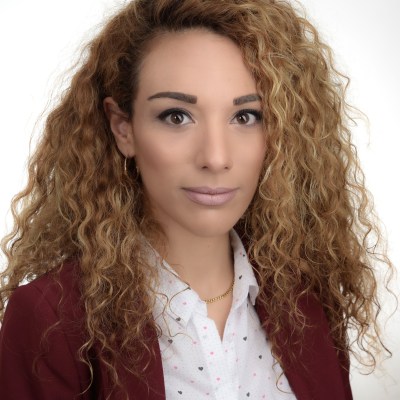
Professor, Technical University of Darmstadt, Germany
Personal website
Georgia Chalvatzaki leads the PEARL Lab at TU Darmstadt. Her research lies at the intersection of robot learning, planning under uncertainty, and human-robot interaction, with a focus on structured and geometrically-grounded representations for manipulation.
Researcher, TU Munich – German Aerospace Center (DLR), Germany
Personal website
Arne Sachtler's research focuses on manifold-valued motor skills, Riemannian geometry for robot learning, and structure-preserving representations for manipulation, particularly in the context of bimanual and dexterous tasks.
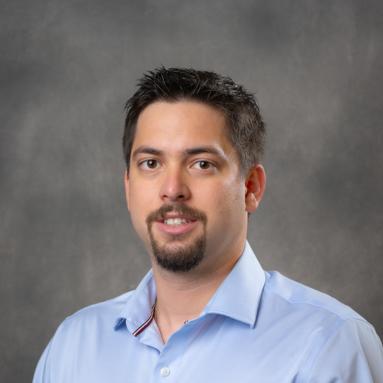
Assistant Professor, Worcester Polytechnic Institute (WPI), USA
Personal website
Constantinos Chamzas works on learning-guided motion planning and geometric representations for robot manipulation, with emphasis on Experience-based Planning Domains and structured latent spaces that respect geometric constraints.
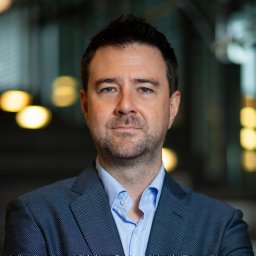
Professor, University of Toronto, Canada
Personal website
Jonathan Kelly leads the Space & Terrestrial Autonomous Robotic Systems (STARS) Laboratory at the University of Toronto. His research focuses on pervasive, persistent, and perceptive autonomous systems, with an emphasis on differential geometric methods in estimation and planning, robust computer vision for navigation, and collaborative mobile manipulation.
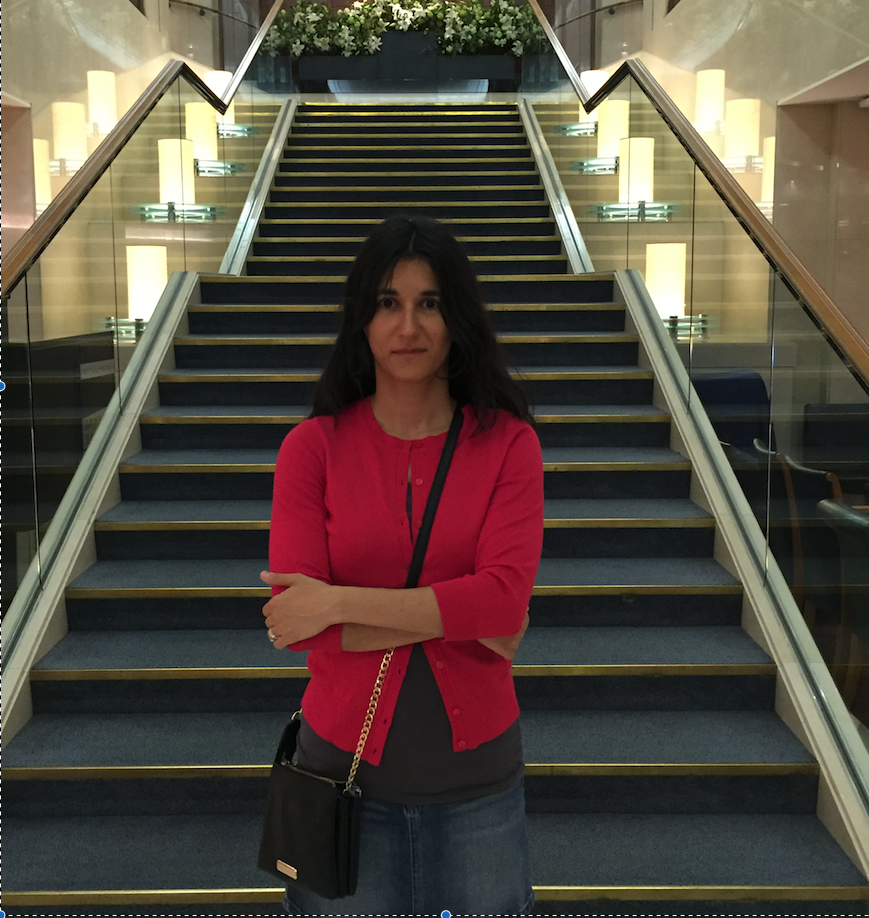
JPMorgan Chase Associate Professor, Carnegie Mellon University, USA
Personal website
Katerina Fragkiadaki's research lies at the intersection of computer vision, machine learning, language understanding, and robotics. Her work focuses on building intelligent embodied agents that acquire predictive world models to reason through physical dynamics and interactions, with an emphasis on representation learning, video understanding, 2D/3D vision-language models, and sim2real robot learning.
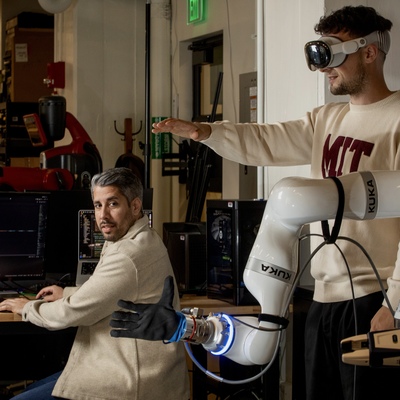
Assistant Professor, Elmore Family School of Electrical and Computer Engineering
Courtesy Appointment, School of Mechanical Engineering
Purdue University, USA
Personal website
Johannes Lachner's research focuses on geometric methods for robot control and manipulation, including task-space control on Lie groups, geometric fabrics, and structured optimization for compliant physical interaction.

Postdoctoral Researcher, University of Washington, USA
Personal website
Tobias Löw is a postdoctoral scholar advised by Prof. Siddhartha Srinivasa at the Personal Robotics Lab at the University of Washington. His research focuses on geometric representations for robotics, with the goal of enabling robots to better perceive, interact with, and adapt to complex human-centered environments. His work explores how geometry can support efficient computation, safe interaction, and scalable generalization across robotic tasks.